Strategy and research
Content strategy per client, with the research alongside.
Every client gets a strategy page: what you are going for, for whom, on which platforms and with which goals. The calendar for the year follows from it. Clyde places signals from research next to it, with the source, and proposes what to do with them. You decide.
- Per client
- Goals, audience and platforms
- Calendar
- Windows for the whole year
- Deciding
- Always you

What you are going for, and for whom.
The strategy page holds, per client, the goal in one sentence, the audience and the customer profile: what those people run into and what the brand promises them. The tabs next to it hold the goals, the platforms, the calendar and the decisions.

The calendar that follows from it.
The calendar divides the year into windows, each with a theme of its own. That way you see per month what that client's content is about, and what comes back every year.
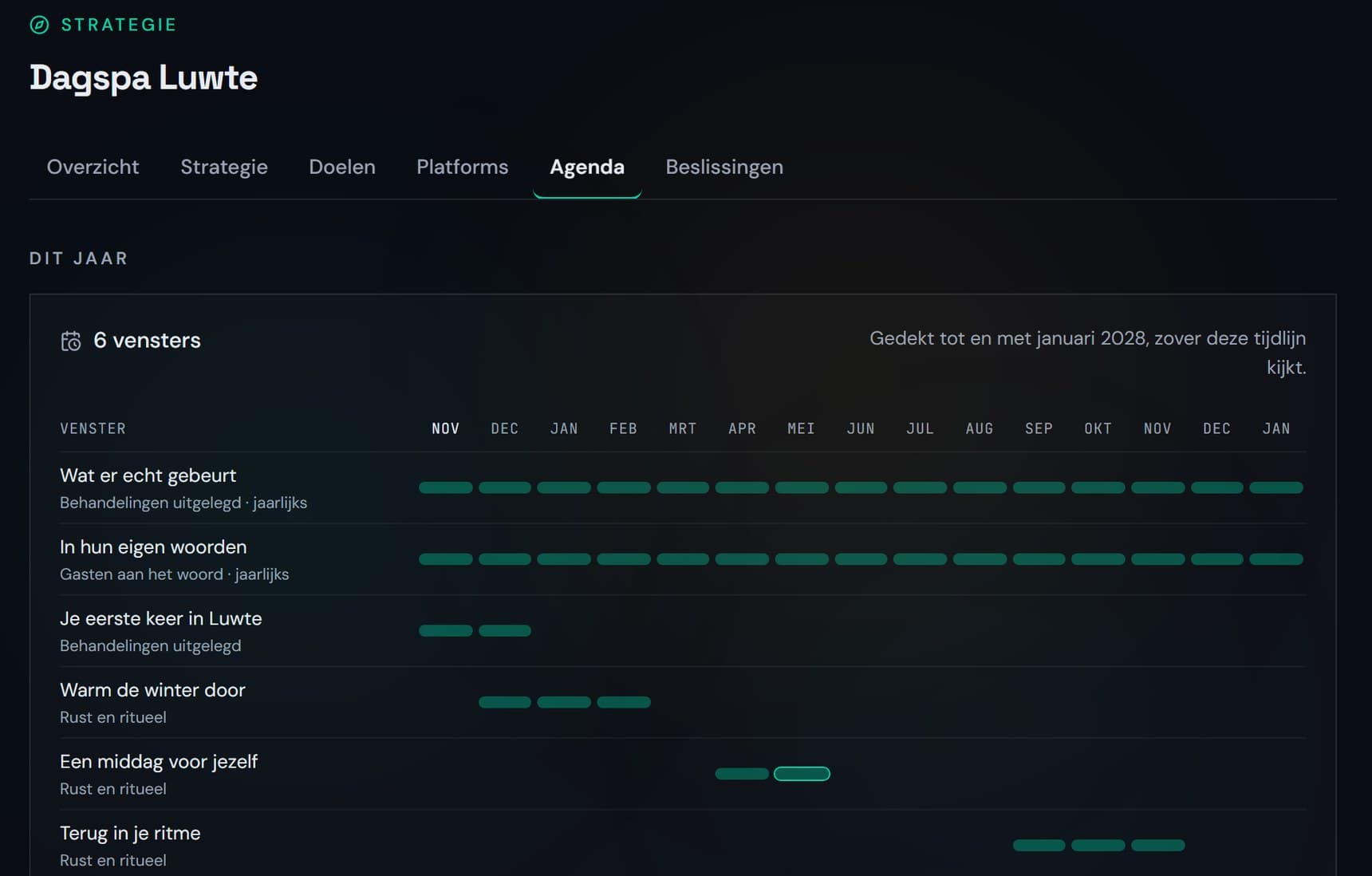
What Clyde bases his proposal on.
Clyde follows trends and competitors in the market per client. What needs attention, he places as a signal in that client's research, with the source, the date and how urgent it is. Open the research to read what lies behind it.
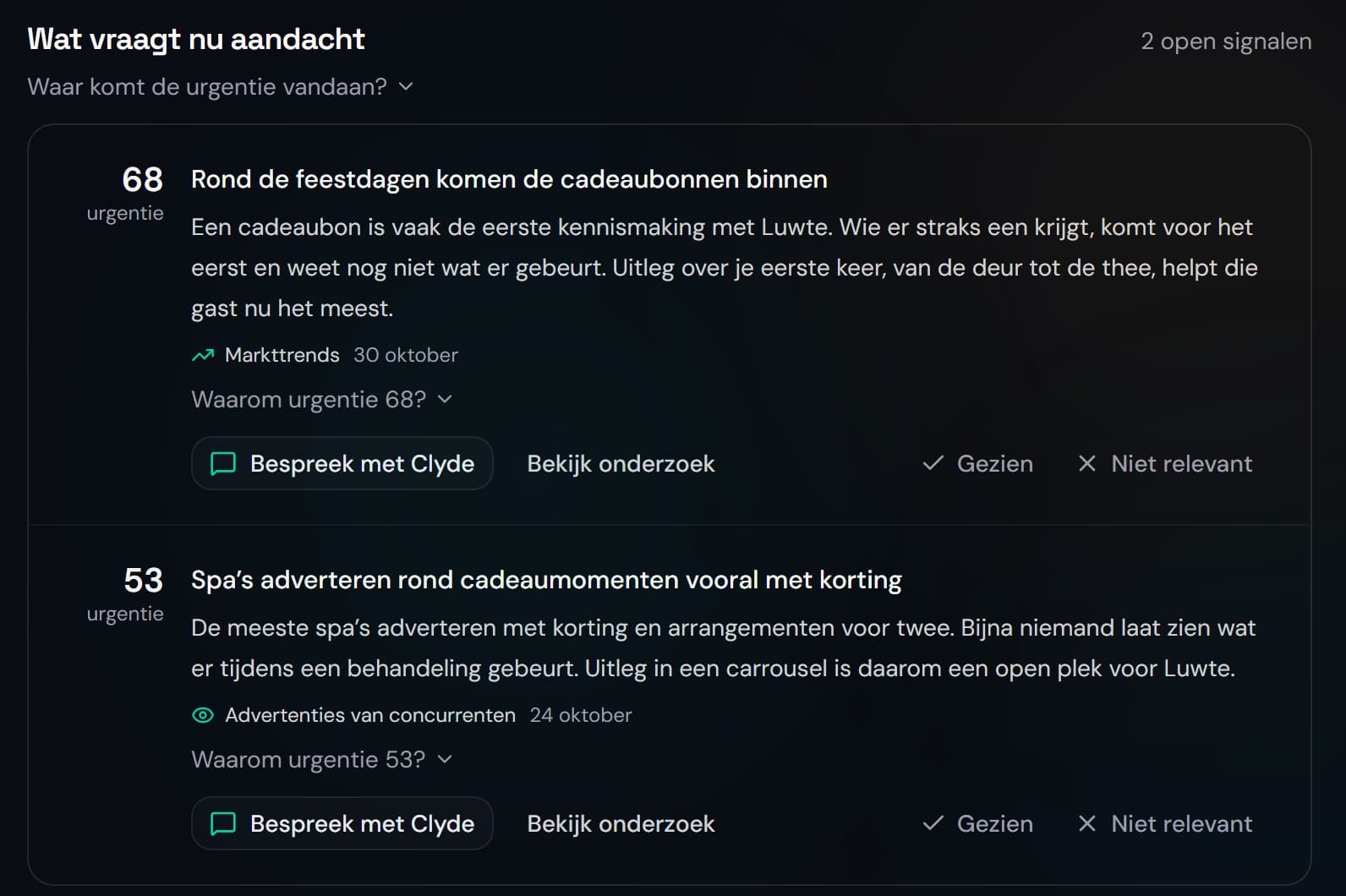
Clyde proposes, you decide.
For every signal you choose what happens with it. Clyde puts a different course to you first, and what has been decided per client is under Decisions on the strategy page.
Discuss with Clyde
You ask what the signal means for this client, and what he would propose.
Seen
You have read it. It moves to Handled, with the date added.
Not relevant
It does not fit this client. That also goes under Handled, and you move it back if you change your mind.
Questions about strategy per client.
What agencies want to know before Clyde thinks along about a client's course.
What is a content strategy per client?
A recorded plan per client brand: the goal, the audience, the platforms and the topics, spread over the year. Clyde works from that plan, together with that client's brand voice and memory.
Where does Clyde get his research from?
From sources on the web, among others via Perplexity. Every signal shows the source and the date, so you can check it yourself.
Does Clyde change the strategy himself?
No. Clyde proposes what could change and why. You decide, and he always puts a different course to you first.
Does my client see the strategy?
If you switch it on for them, your client has a strategy page in their portal, with the Ask Clyde card. What else they see is on the client portal page.
Start the week with a plan.
A 30-minute call about the clients you have now.